Can Air Conditioners Spread Bacteria or Viruses?


If you live in Singapore, you know how much of a lifesaver air conditioning is. Whether you’re at home trying to escape the afternoon heat, sitting in an office building downtown, or doing some shopping during the weekend, aircon is everywhere. It keeps us comfortable in a climate where temperatures rarely dip and humidity is relentless.
But comfort sometimes comes with questions. During the COVID-19 pandemic, many people began to wonder: Can air conditioners spread bacteria or viruses? It’s a fair concern. We spend hours each day in air conditioned spaces. If an air conditioning system could worsen the risk of virus transmission or make the indoor air unsafe, that would affect almost everyone in Singapore.
The truth is a little nuanced. Air conditioners themselves don’t create bacteria or viruses. But depending on how they’re used and maintained, they can be a breeding ground for microbes and contribute to the spread of harmful particles in the air. This is especially true in crowded or poorly ventilated environments, such as schools, office buildings, or even a small HDB flat with all the windows shut.
The good news? With the right maintenance, filters, and ventilation, the spread of germs through air conditioning can be controlled — and the health risks kept to a minimum.
In this article, we’ll take a deep dive into how air conditioning systems work, what science says about their role in spreading bacteria and viruses, and what you can do to keep your indoor environment safe and healthy.
Quick Takeaways
Air conditioners do not create bacteria or viruses, but they can spread them in the air if neglected.
Dirty air filters, humidity, and poor ventilation increase the risk of virus transmission and other health risks.
Outbreaks of diseases such as Legionnaires’ disease show that air conditioning systems must be maintained properly.
Using HEPA filters, maintaining fresh air flow, and scheduling regular servicing are the best ways to ensure indoor air quality.
In Singapore, where air conditioning is a daily necessity, maintenance can be the difference between healthy indoor air and a breeding ground for germs.
How Air Conditioning Systems Actually Work
Before we answer whether air conditioners spread germs, it’s important to understand the basics of how an air conditioning system operates.
An air conditioner is essentially a machine that takes in warm indoor air, removes its heat and humidity, and then releases cool air back into the room. In Singapore, most homes use split-type air conditioning units.
These are the wall-mounted units you see in HDB bedrooms and living rooms. They rely heavily on recirculating the indoor air rather than bringing in large amounts of fresh air from outside.
Larger commercial hvac system setups — like those used in malls, hotels, or office towers — include a ventilation system with air conditioning ducts that can supply both cooled and fresh outdoor air. When maintained properly, these systems provide comfort while balancing air quality.
Inside every air conditioner is an air filter. Their job is to catch dust, pollen, and sometimes microbes. But here’s the catch: if these filters aren’t cleaned or replaced regularly, they lose effectiveness. Instead of improving indoor air quality, clogged filters can trap pollutants, moisture, and even mould — turning into a breeding ground for bacteria and germs.
So, while the air conditioner is designed to improve comfort, the air conditioning system also has the potential to impact human health if neglected.
The Big Question: Can Air Conditioners Spread Bacteria or Viruses?
Let’s get straight to it: can air conditioners spread bacteria or viruses?
The answer is yes, but only under certain conditions. An air conditioning unit does not magically produce microbes. However, suppose bacteria or viruses are already present in the indoor air. In that case, the air conditioning units can contribute to their spread by recirculating contaminated air from the room to other areas.
Think of it this way: if one person sneezes in a room, droplets containing the virus can be suspended in the air. If the ac is on, it can move these droplets through the indoor space, increasing the risk of other people inhaling them.
This is why researchers looked closely at the role of air conditioning in the spread of COVID-19. Some studies have found that airflow from air conditioners helps push droplets from one table to another in restaurants.
Bacteria are also a concern. For example, Legionella pneumophila thrives in contaminated water found in poorly maintained cooling towers or drain trays of the air conditioning system. If spread by the unit, this bacterium can cause Legionnaires’ disease, a serious illness with a high mortality rate if not treated quickly.
Chin et al and other researchers have highlighted such outbreaks. The survival rate of infected patients depends heavily on early detection and treatment.
So while the air conditioner isn’t the root cause of the virus or bacteria, it can be part of the system that helps them spread — especially if there is poor maintenance, poor ventilation, and inadequate cleaning.
Why Air Conditioners Can Be Risky: Key Factors
Here are the main factors that determine whether an air conditioner becomes part of the problem:
Dirty air filters - Filters clogged with dust and microbes no longer trap pollutants effectively. Instead, they become a breeding ground for mould, bacteria, and germs.
Excess humidity - In Singapore’s tropical climate, humidity is a constant challenge. If the air conditioning unit does not regulate it well, moisture can accumulate, allowing mould and microbes to thrive.
Poor ventilation - In an air-conditioned room with no fresh air intake, viruses and bacteria stay in the indoor environment for longer. Without dilution from outdoor air, the risk of transmission rises.
Air conditioning ducts - In larger HVAC system installations, air pollutants, dust, or microbes trapped in the ducts can be redistributed during the cooling cycle.
Crowded indoor spaces - When many people share the same air conditioning system, such as in office buildings, malls, or classrooms, the risk of virus transmission increases.
All of these conditions combine to create what’s known as sick building syndrome. People working or living in such environments often report throat irritation, headaches, and fatigue — all of which are linked to poor indoor air quality.
The Science: What Research Shows
Several studies shed light on the link between air conditioning and bacteria or viruses:
Legionella pneumophila outbreaks: Cooling towers and contaminated water reservoirs have been linked to outbreaks of Legionnaires’ disease. This disease is caused by inhaling tiny droplets of water containing bacteria. It can be fatal, with a worrying mortality rate if not caught in time.
COVID-19 transmission: During the pandemic, scientists examined airflow in restaurants, buses, and office buildings. They concluded that virus transmission could occur more easily in closed spaces where air conditioning recirculates air without fresh air dilution.
Indoor air pollutants: Beyond viruses, poorly maintained systems can recirculate dust, particulate air, and microbes. These pollutants can worsen allergies, asthma, and general respiratory health risks.
Sick building syndrome evidence: Multiple reports confirmed that the combination of low ventilation, mould in ducts, and recirculated air pollutants leads to poor human health outcomes.
The conclusion is consistent: air conditioning can be linked to the spread of bacteria or viruses; however, the real culprit is often inadequate maintenance and poor ventilation practices.
Everyday Signs Your Air Conditioner Might Be a Problem
Here are warning signals that the air conditioner in your home or office may be contributing to health risks:
Musty, unpleasant smells in the room.
Visible mould growth on air vents or air filters.
Feeling throat irritation, sneezing, or coughing during the air-conditioned hours.
Frequent colds, fatigue, or respiratory issues among people in the room.
Condensation or unexplained water pooling around the air conditioning unit.
Hot and cold spots in the room, suggesting poor airflow distribution.
If you notice these signs, it’s time to call for servicing before your AC becomes a breeding ground for germs.
How to Prevent the Spread of Bacteria and Viruses Through Air Conditioning
The good news? Air conditioners can be maintained to minimize the risk of microbial spread. Here’s how:
1. Clean and Replace Air Filters Regularly
Dirty filters trap dust, pollen, and microbes. Cleaning or replacing them ensures good air quality and prevents filters from becoming a breeding ground for bacteria. In Singapore, filters should be cleaned every 2–3 weeks and replaced every few months, depending on usage.
2. Use HEPA Filters or Air Purifiers
High efficiency particulate air (HEPA) filters are designed to trap very fine particles, including viral aerosols. Adding a HEPA filter to your system or placing air purifiers in rooms improves indoor air significantly.
3. Control Humidity and Temperature
Keeping humidity between 40–60% reduces the chance of mould growth. Set your air conditioner to maintain this balance. Avoid extreme temperature settings, as sharp differences between indoor and outdoor temperatures can worsen condensation.
4. Improve Ventilation and Fresh Air Flow
Whenever possible, bring in fresh air. Open a window, run an exhaust fan, or use a ventilation system. In office buildings, ensuring air conditioning ducts are maintained and supply outdoor air is essential.
5. Regular Maintenance and Chemical Washes
Professional servicing ensures that coils, drain lines, and vents are thoroughly cleaned. In severe cases, chemical washes or steam cleaning may be necessary to eliminate mould and bacteria completely.
6. Monitor Indoor Air Quality
Modern systems and air purifiers come with air quality monitors. These provide real-time information on pollutants in the air, so you know when it’s time for action.
Singapore Context: Why Maintenance Is Even More Important Here
Singapore’s climate is consistently hot and humid throughout the year. That means our air conditioning units work harder and run for longer hours than in temperate countries. This constant usage, combined with high humidity, increases the risk of mold, microbes, and air pollutants accumulating.
For homes, neglecting maintenance can lead to mold growth inside the air conditioning unit, reducing air quality and posing health risks to family members.
In office buildings, poor maintenance can expose hundreds of people daily to recirculated microbes, leading to more sick days and lower productivity.
Given the heavy reliance on air conditioning in Singapore, regular maintenance is not just about comfort — it’s about protecting human health.
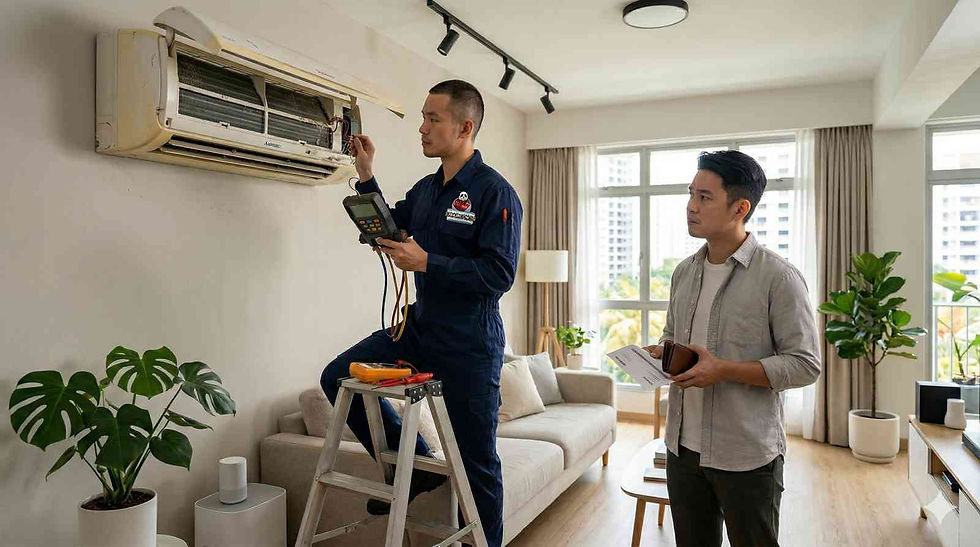
Why Professional Aircon Servicing Matters
While some simple steps like cleaning filters can be done at home, the deeper cleaning that prevents bacteria and viruses requires professional expertise.
Professional servicing includes:
Replacing or sanitizing filters.
Cleaning coils, air conditioning ducts, and air vents.
Removing mould and bacteria colonies from hidden areas.
Checking for leaks, condensation issues, or drainage problems.
Calibrating the system for proper temperature and humidity control.
This level of maintenance not only reduces health risks but also extends the lifespan of your air conditioning units and lowers long-term costs.
FAQ Section
1. Can air conditioners spread viruses like COVID-19?
Yes, they can contribute to the spread if they recirculate contaminated aerosols in the air. However, with clean filters, proper ventilation, and fresh air, the risk can be reduced.
2. How often should I service my aircon in Singapore?
For homes, every 3–4 months is recommended. For heavily used systems in office buildings, monthly or bi-monthly servicing is advisable.
3. Do air purifiers help alongside air conditioning?
Yes. Air purifiers with HEPA filters trap particulate air pollutants and microbes, complementing the air conditioner.
4. What are common signs of mould or bacteria in an air conditioner?
Musty smells, condensation, throat irritation, or visible mould in the vents.
5. Is chemical wash really necessary?
It can be. If your air conditioning unit shows signs of mould, slime, or heavy dust buildup, chemical or steam cleaning ensures the system is fully sanitized.
Final Thoughts
So, can air conditioners spread bacteria or viruses? The answer is yes — but only if neglected. The real issue isn’t the machine itself, but how we maintain it. An air conditioning system that is regularly serviced, equipped with clean filters, and supported by good ventilation can actually improve indoor air quality rather than harm it.
In Singapore’s climate, where aircon is part of daily life, maintenance is not optional. It can be the difference between a comfortable, safe home or office and one where microbes, mould, and air pollutants thrive.
Worried about whether your air conditioner is circulating more than cool air? Don’t leave it to chance. Protect your loved ones and colleagues from unnecessary health risks. Book a professional servicing with 338 Aircon today. Our team ensures your air conditioning system stays clean, efficient, and safe — so you can breathe easier and live healthier.