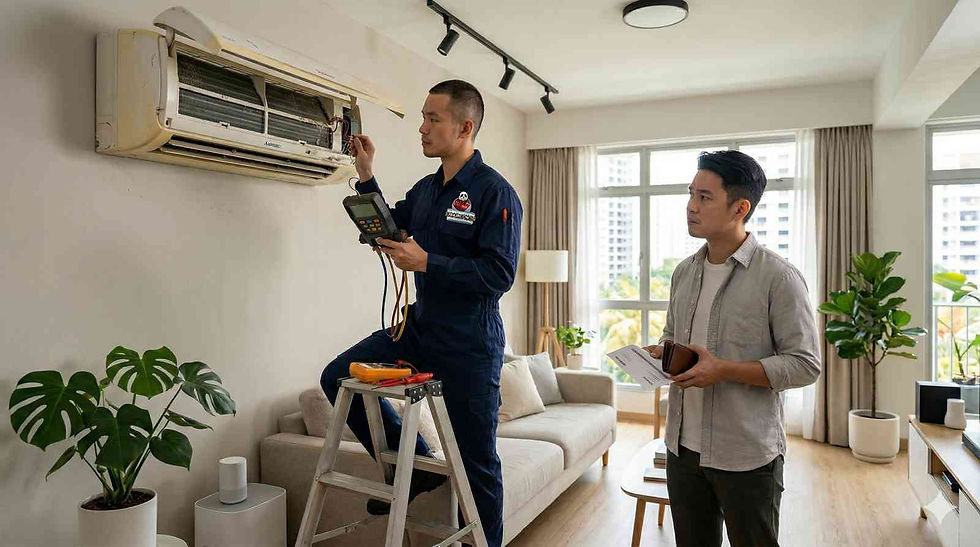
Using Your Aircon During Haze: Tips for Cleaner Air in Singapore Homes


Haze season is one of those recurring realities of life in Singapore. When the skyline turns grey, the haze settles in, and PSI readings start creeping up, many households are left wondering what to do next.
Should you turn off your air conditioner? Is it safer to open the windows? Will running your aircon actually trap haze pollutants indoors?
If you have ever asked these questions, you are not alone. Using your aircon during haze can either protect your family’s health—or make indoor air problems worse—depending on how it is used.
This guide breaks down what really happens in the air, how air pollution affects your home, and how to use your air conditioning system properly during the haze to keep indoor air as clean as possible.
Quick Takeaways
Using your aircon during haze is safe if filters are clean and rooms are sealed
Most residential air conditioners do not pull polluted air from outside
Dirty aircon filters can worsen indoor air quality
An air purifier helps when the haze is severe or prolonged
Proper aircon servicing is essential during the haze season
Understanding Haze in Singapore: What’s Really in the Air?
Haze in Singapore is usually caused by forest fires in the region, where smoke travels across borders and settles over the island. This occurrence introduces a mix of air pollutants, including extremely fine haze particles known as PM2.5.
These particles are so small that they can remain suspended in the air for hours and penetrate deep into the lungs when inhaled. According to the National Environment Agency, PM2.5 is one of the most concerning components of smoke haze because it is linked to greater health impacts, especially for vulnerable groups.
When haze levels rise, air quality readings worsen, and official PSI readings are used to guide public health advisories. A higher psi reading generally means more air pollution and a greater risk to protect against exposure.
Why Haze Is a Serious Health Concern
Haze is not just an inconvenience—it can have real effects on health from long-term exposure. Fine air particles can irritate the eyes, nose, and throat, and in more serious cases, lead to breathing difficulties.
People with health conditions such as asthma, heart disease, or chronic obstructive pulmonary disease (COPD) are especially vulnerable. Children and the elderly are also at higher risk. Even healthy adults may experience headaches, fatigue, or reduced lung function during the haze.
This is why managing indoor air properly becomes critical. When outdoor air is polluted, your home should act as a protective barrier—not a trap that recirculates dirty air.
Can You Use Your Aircon During Haze?
The short answer: Yes, it can be safe—and even beneficial—to use your aircon during haze, if it is used correctly.
Most residential split-system air conditioners in Singapore do not draw air directly from the outdoors.
Instead, they recirculate the air already inside your home. This means your aircon does not automatically bring smoke or pollutants into your living space.
However, there are important caveats. While the cooling unit itself does not pull outdoor air, air leakage can still occur through gaps in the windows and doors, poorly sealed rooms, or when filters are dirty.
Understanding these factors is key to reducing indoor haze exposure.
Does Your Aircon Bring Haze Air Inside?
A common misconception is that turning on the air conditioner will suck polluted air from the outside. In most Singapore homes, this is not how split-unit air conditioning works.
What Actually Happens
The indoor unit pulls your air from the room
The air passes through an air filter
It is cooled and returned to the room
Because of this closed-loop system, using your aircon can help maintain more stable indoor air quality—provided the room is sealed correctly.
However, if doors and windows are left open, or if there are gaps in your home structure, polluted outdoor air can still seep inside. In such cases, running the aircon alone is a partial solution, not a complete one.
The Role of PSI Readings and When to Take Extra Precautions
PSI levels are an important reference point. When psi readings are in the moderate range, normal aircon use is generally fine. But when psi levels climb into unhealthy ranges, extra steps should be taken.
At higher psi, the concentration of haze particles increases, and indoor air can deteriorate more quickly if preventive measures are not in place. This is when the difference between a clean and dirty aircon filter becomes critical.
If air quality readings show sustained poor conditions, households should limit outdoor exposure, keep the windows and doors closed, and ensure air filtration systems are working effectively.
Best Aircon Settings to Use During the Haze
Knowing how to set your aircon properly can significantly improve indoor comfort and safety.
Recommended Settings
Use cool mode instead of dry mode for consistent airflow
Set a moderate temperature (24–26°C) to avoid overworking the unit
Use a steady fan speed to improve the circulation of air
Avoid constantly switching the unit on and off, as this can reduce filtration effectiveness and allow polluted air to be drawn in through pressure changes.
Why Your Aircon Filter Matters More Than You Think
Your aircon filter is the first line of defence against indoor air pollutants. Standard filters are designed to trap dust and larger particles, but during haze season, they clog much faster due to fine haze particles.
A dirty air filter does two harmful things:
Reduces airflow efficiency
Allows pollutants to circulate in your home
During heavy haze, filters may need to be cleaned every one to two weeks. Neglecting this simple step can significantly worsen indoor air quality.
Aircon vs Air Purifier: Do You Need Both?
Many homeowners ask whether an air purifier is necessary if they already have aircon. The answer depends on the severity of the haze and the household's needs.
An air conditioner cools air but offers limited filtration. An air purifier, on the other hand, is designed specifically to remove fine air particles.
When an Air Purifier Helps
High psi levels over several days
Family members with breathing difficulties
Homes near busy roads or industrial areas
In these cases, using an air purifier alongside aircon can dramatically improve indoor air quality. HEPA-equipped air purifiers are especially effective in reducing PM2.5 levels.
Common Mistakes People Make During Haze
Despite good intentions, many households unintentionally worsen indoor air conditions.
Common Errors
Opening windows “for fresh air” during the haze
Running aircon with clogged air filters
Ignoring aircon servicing schedules
Relying solely on masks indoors
Opening windows allows haze pollutants to enter freely. Even high-quality N95 or other masks are meant for temporary outdoor use, not as a long-term indoor solution.
HDB vs Condo vs Landed Homes: What’s Different?
The effectiveness of using air conditioning during the haze also depends on the type of home.
HDB flats: Generally compact, easier to seal, but older units may have window gaps
Condos: Better insulation, but higher floors may experience pressure differences
Landed homes: More exposure points, higher risk of air leakage
Regardless of home type, ensuring that doors and windows are well-sealed and filters are clean is essential to protect indoor air quality.
When to Consider Aircon Servicing During Haze Season
Haze accelerates dirt buildup inside air conditioning systems. This makes aircon servicing especially important during the haze period or immediately after.
Signs you may need servicing include:
Musty smells when the unit runs
Reduced cooling performance
Increased dust accumulation in the room
Professional servicing removes trapped pollutants, cleans internal components, and restores proper airflow—helping your aircon work more effectively when you need it most.
Practical Checklist for Cleaner Indoor Air During Haze
Here is a simple checklist to reduce haze exposure indoors:
Keep the windows and doors closed
Clean or replace air filters regularly
Use aircon consistently rather than intermittently
Add air purifiers if psi levels remain high
Monitor official psi and air quality readings
This approach creates multiple layers of protection in your home.
Final Thoughts: Staying Prepared, Not Panicked
Haze is an unfortunate but recurring part of life in Singapore. The key is not fear, but preparation. When used correctly, air conditioning can help maintain cleaner, more comfortable indoor environments—even when the air outside is polluted.
By understanding how your system works, maintaining clean air filters, and responding appropriately to psi readings, you can significantly reduce the effects of haze on your household. Clean air indoors is not about doing one big thing—it is about doing several small things consistently, and doing them right.
FAQs
Should I turn off my aircon if PSI levels are very high?
No. Turning off your aircon can allow polluted air to enter more easily through gaps. Keeping it on with clean filters helps stabilise indoor air quality.
Is dry mode better than cool mode during haze?
Cool mode is generally better because it provides continuous airflow and filtration. Dry mode may reduce the circulation of air.
Can haze damage my air conditioning system?
Yes. Fine haze particles can clog internal components over time, making aircon servicing more important after prolonged haze exposure.
Are air purifiers necessary for everyone?
Not always. For healthy adults in sealed homes, aircon alone may suffice. For those with health conditions, air purifiers add extra protection.
Should I wear masks indoors?
Masks such as N95 are useful outdoors but not ideal indoors. Improving indoor air quality is more effective than prolonged mask use at home.