

Is It Worth Repairing a 10 Year Old Air Conditioner in Singapore?

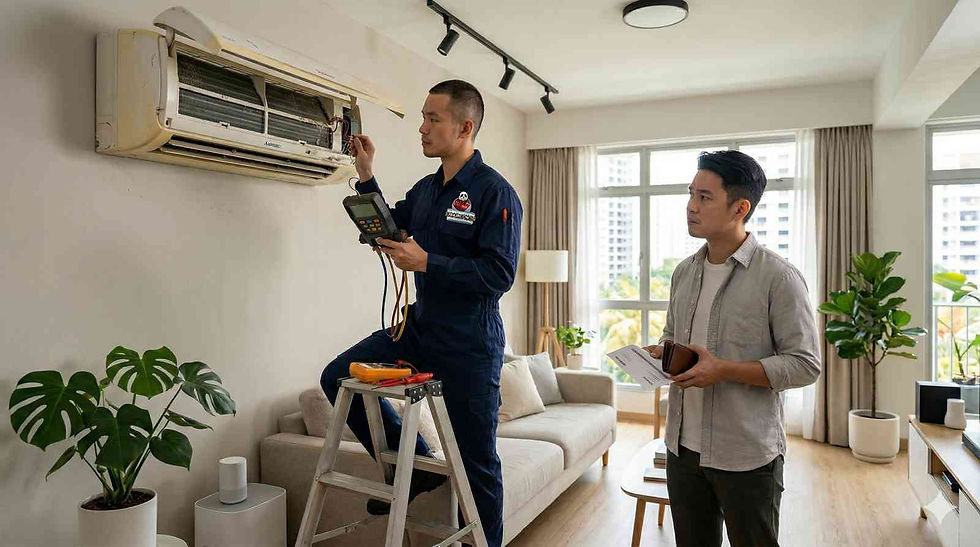
If you’re asking, “Is it worth repairing a 10-year-old air conditioner?”, you’re not alone. In Singapore’s hot and humid climate, your aircon works harder than almost anywhere else in the world.
By the time your system reaches 10 years old, it’s often at a turning point—and making the right decision can save you thousands.
In this guide, we’ll walk you through a practical, Singapore-focused decision-making process so you know exactly whether to repair or replace your unit.
Quick Answer: Is It Worth Repairing a 10 Year Old Air Conditioner?
In most cases, repairing a 10 year old air conditioner is only worth it if the repair cost is low and the system is still energy efficient. If breakdowns are frequent, cooling performance has dropped, or your electricity bills are rising, it’s usually time to replace your air conditioner.
Understanding the Lifespan of an Air Conditioner in Singapore
The lifespan of an air conditioning system depends heavily on usage and environment.
In Singapore:
Most air conditioners are used daily due to the tropical climate
Systems often run 8–12 hours per day
High humidity accelerates wear on internal parts
Typical lifespan:
Budget models: 8–10 years
Mid-range units: 10–12 years
Premium systems: 12–15 years (with proper maintenance)
So if your aircon unit has crossed the 10-year mark, it’s entering the final stage of its life cycle.
What Happens When an Aircon Turns 10 Years Old?
As your air conditioner ages, several things begin to happen:
The condenser and internal parts wear out
Cooling becomes less consistent
Energy efficiency drops significantly
Repair costs start increasing
Even with regular aircon servicing, an old air conditioner will naturally lose performance over time.
This is why many homeowners begin asking: Is it worth it to repair or replace your aircon at this stage?
The 30–40% Rule: A Simple Decision Framework
Here’s a practical rule used by many HVAC technicians:
If the cost of repairing your unit is more than 30–40% of a new unit, it’s usually better to replace.
Example in Singapore:
Minor repair: $80–$150 → Worth it
Gas top-up: $120–$250 → May be worth it
Major repair (compressor, condenser): $500–$900+ → Time to replace
If the repair cost approaches the cost of a new unit, investing in a replacement makes more financial sense.
5 Signs Your Old Air Conditioner Is Not Worth Repairing
If your system is 10 years old, watch out for these warning signs:
1. Weak Cooling Performance
If your air conditioner is no longer cooling effectively, even after servicing, it may be nearing the end.
2. Frequent Breakdowns
If you’re constantly calling for repairs, it’s a clear sign that your unit is deteriorating.
3. Rising Electricity Bills
Older systems use more energy. If your energy bills are increasing, your unit is likely less energy efficient.
4. Strange Noises or Vibrations
Worn-out parts can cause rattling or buzzing sounds—often a sign of deeper problems.
5. Major Component Failure
If the condenser, compressor, or other critical parts fail, the cost of repairing them may not be worth it.
When Repairing Still Makes Sense
Not every 10 years old system needs replacement. There are situations where it still makes sense to repair it:
The issue is minor (e.g., capacitor, fan motor)
The unit has been well-maintained with regular tune-ups
The system is a premium brand with a longer lifespan
Repair costs are low compared to replacement costs
If your system is less than 10 years old, repairing is almost always the better option.
Energy Efficiency: The Hidden Cost Most People Ignore
A key factor in the decision-making process is energy efficiency.
Older air conditioning systems:
Consume 20–40% more electricity
Struggle to maintain consistent cooling
Increase long-term operating costs
Newer models:
Are significantly more energy efficient
Use inverter technology to reduce energy use
Lower your monthly electricity bills
So while the cost of a new unit may seem high upfront, the long-term savings can outweigh the cost of repeated repairs.
Repair vs Replacement: Cost Comparison in Singapore
Here’s a simple breakdown:
Scenario | Repair Cost | Replacement Cost | Recommendation |
Minor issue | $100 | $3,000 | Repair |
Gas top-up | $200 | $3,000 | Repair (short-term) |
Compressor failure | $700+ | $3,000 | Replace |
Frequent problems | $400/year | $3,000 | Replace |
If you find yourself repeatedly paying for repairs, it’s often a sign that it’s time to replace.
Singapore-Specific Factors You Must Consider
Living in Singapore changes everything when it comes to aircon decisions:
1. Heavy Usage
Aircon is not a luxury—it’s essential. This accelerates wear on your HVAC system.
2. High Humidity
Moisture affects internal components, accelerating their deterioration.
3. Compact Living Spaces
In HDB flats and condos, efficient cooling is critical for comfort.
Because of these factors, an old air system in Singapore may not last as long as in other countries.
Repair or Replace: A Clear Decision Guide
Here’s a simple framework to help you decide:
Repair Your Aircon If:
The repair cost is low
No major parts are damaged
Cooling is still strong
The system is less than 10 years old
Replace Your Air Conditioner If:
The unit is 10 years old or more
There are frequent problems
Energy bills are rising
Major components have failed
When in doubt, ask a professional HVAC technician to assess your system.
Why Replacing May Be the Smarter Investment
While repairing may seem cheaper in the short term, replacing can be more cost-effective over time.
Benefits of Replacement:
Lower energy bills
Better cooling performance
Fewer breakdowns
Improved indoor comfort
Modern air conditioners are designed with advanced features that significantly improve efficiency and reliability.
If your system is already 10 years old, investing in a new unit often provides better long-term value.
Real-World Insight: What Most Homeowners Get Wrong
Many homeowners repeatedly try to repair their old aircon, thinking they are saving money.
In reality:
Small repairs add up quickly
Older units become less reliable
Efficiency continues to decline
By the time they decide to replace, they’ve already spent hundreds—sometimes thousands—on repairs.
Final Verdict: Is It Worth Repairing a 10 Year Old Air Conditioner?
So, is it worth repairing a 10 year old air conditioner?
👉 Yes, if:
Repair costs are low
The system is still performing well
No major components are failing
👉 No, if:
The unit is breaking down frequently
Energy consumption is high
Major repairs are needed
In most cases, once your aircon reaches 10 years old, it’s time to seriously consider replacing it rather than continuing repairs.
Not Sure Whether to Repair or Replace Your Aircon?
If you’re still unsure whether to repair or replace your aircon, the best next step is a professional inspection.
At 338 Aircon, we help homeowners across Singapore make the right decision based on:
Actual system condition
Repair vs replacement cost
Long-term savings
👉 Get a fast diagnosis and honest recommendation—so you don’t waste money on the wrong decision.
Bottom Line
When it comes to an old air conditioner, the question isn’t just “is it worth it?”—it’s about making the smartest long-term decision.
In Singapore’s demanding climate, knowing when it’s time to replace can save you from ongoing costs, poor performance, and unnecessary stress.


