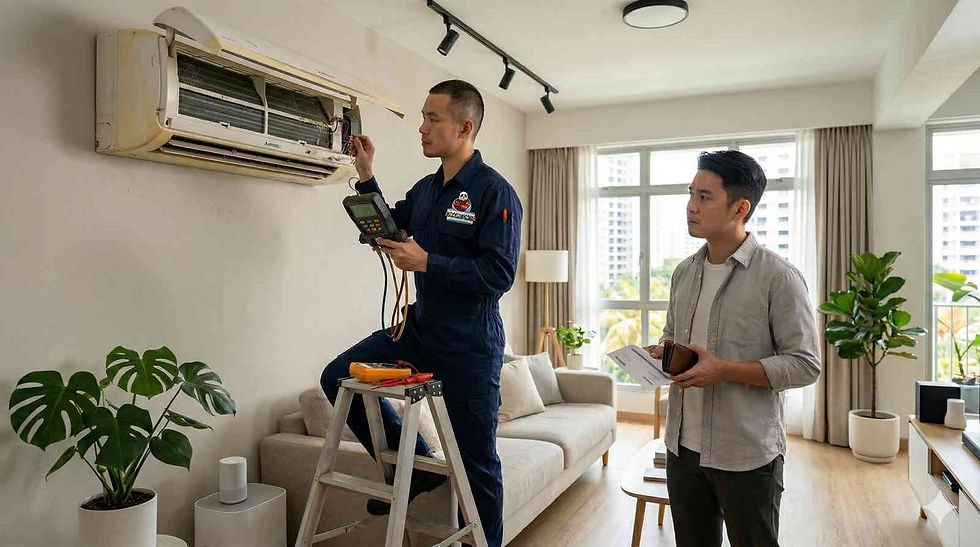
Can Dirty Aircon Coils Increase Your Electricity Bills?


Have you noticed your electricity bills creeping up even though you use your aircon the same way you always have? You switch it on every evening, keep it at around 24°C and leave the settings alone. Yet the room takes longer to cool, and the bill keeps rising.
Before you assume the aircon is too old and needs replacing, take a closer look at its coils.
Dirty coils are a common and often overlooked cause of weak cooling and higher energy use. Over time, dust, grease, moisture and other airborne particles settle on the coil surfaces. This buildup gets in the way of heat transfer, so the system has to work harder to hold the temperature you set.
In Singapore, where many homes run the aircon almost every day, that extra effort adds up. Proper maintenance can help restore cooling performance and prevent unnecessary energy use. Below, we look at how dirty coils affect your electricity bill, the warning signs to watch for, and when it makes sense to book professional aircon servicing.
How Do Aircon Coils Work?
Your air conditioner uses two coils to move heat out of your home: the evaporator coil and the condenser coil. They do different jobs, and both need to stay reasonably clean for the system to run efficiently.
1. Evaporator Coil
The evaporator coil sits inside the indoor unit. As warm room air passes over the cold coil, heat moves into the refrigerant inside it, and the cooled air is blown back into the room.
2. Condenser Coil
The condenser coil is usually located in the outdoor compressor unit. It releases the heat collected indoors into the outside air.
When dust and dirt build up on either coil, heat transfer becomes less effective, and the system may need longer operating cycles to reach the temperature you set.
How Dirty Coils Affect Your Aircon's Energy Use
Dirty coils can raise electricity consumption because they reduce how well the aircon transfers heat. Picture coming home from work and switching on the aircon. You expect the room to cool within a reasonable time, but if the evaporator or condenser coil is coated in dirt, the system has to run longer to get there. If the problem is left unattended, that extra running time shows up on your bill.
1. Your Aircon Runs Longer to Reach the Set Temperature
A clean evaporator coil passes heat from the room air to the refrigerant efficiently. Dust and grime slow this down, so the aircon keeps running while it struggles to bring the room to the temperature you selected, and longer cycles use more electricity.
If your bedroom now takes much longer to cool than it used to, dirty coils are one possible reason. For families running several units every night, even a gradual drop in efficiency can make a noticeable difference over time.
2. The Compressor Works Under More Strain
The compressor circulates refrigerant and keeps the cooling process going. When the condenser coil is dirty, heat cannot escape as easily. Depending on the system and how heavy the buildup is, this can raise operating pressure and temperature.
Running under these conditions for a long time can reduce efficiency and add wear to the compressor. In severe cases, it may also increase the risk of expensive component failures.
3. Poor Heat Transfer Reduces Cooling Efficiency
An air conditioner works by moving heat from one place to another. A layer of dirt on the coils sits between the coil surface and the surrounding air, so less heat is exchanged.
You might notice that the air from the vents feels less cold even though the unit runs continuously. Several problems can cause this, and dirty coils are worth checking.
5 Warning Signs Your Aircon Coils May Need Cleaning
Dirty coils are hard to spot without inspecting the unit, but some changes in performance suggest maintenance is overdue.
1. Your Aircon Is Not Cooling Like Before
If your room feels warmer at the same temperature setting, restricted airflow or dirty coils could be contributing.
2. Electricity Bills Are Increasing
A sudden or gradual rise in electricity use deserves attention, especially if your aircon usage has stayed the same. Electricity tariffs, the weather and other household appliances can also affect your bill, so keep those in mind.
3. Your Aircon Runs for Longer Periods
If the unit seems to run nonstop without reaching the set temperature, poor heat transfer from dirty coils could be one explanation.
4. Weak Airflow From the Indoor Unit
Dust on the filters and coil surfaces can restrict airflow, so the air coming from the unit may feel weaker than usual.
5. Unusual Ice Formation or Water Leakage
Restricted airflow and some other cooling problems can make the evaporator coil too cold, and ice can form on it. When the ice melts, the unit may leak water.
If the ice or leakage is significant, switch off the unit and arrange for a technician to inspect it.
Why Are Dirty Aircon Coils a Common Problem in Singapore?
Singapore's tropical climate means many households use their aircon almost every day, all year round. Several conditions here make coil contamination more likely.
Humidity is one of them. Moisture around the evaporator coil helps dust and airborne particles stick to its surface, and persistent moisture can encourage mould growth when conditions allow. Everyday dust, cooking residue and pet hair also collect inside the unit over time.
Usage plays a part too. An aircon that runs for several hours a day draws a lot of indoor air through its filters and cooling components. Washing the removable filters helps, but it does not reach the dirt that builds up on internal parts.
This is why professional aircon maintenance matters, particularly in homes with several indoor units.
Can Regular Aircon Servicing Help Reduce Electricity Consumption?
Regular servicing helps your aircon maintain better operating efficiency by dealing with dirt buildup, airflow restrictions and developing maintenance issues. Coil cleaning is one part of this, and a technician should assess the overall condition of the system before recommending any work.
Singapore's energy agencies give similar advice. The Energy Market Authority's energy-saving tips recommend servicing air-conditioners regularly so they function more efficiently, and the National Environment Agency's energy-saving tips advise keeping the air filter clean so the unit runs efficiently.
A typical servicing appointment may include:
Cleaning the air filters to remove accumulated dust
Inspecting and cleaning accessible evaporator coil surfaces
Checking the drainage tray and drainage pipe for blockages
Inspecting the indoor blower and airflow
Checking the outdoor condenser unit for dirt and restricted airflow, where accessible
Assessing cooling performance and identifying possible faults
At 338 Aircon, general servicing follows a 10-step process. It includes cleaning and checking the indoor cooling coil and the evaporator coil, flushing the drainage tray and checking the outdoor unit's refrigerant level.
The exact work depends on the servicing package and the condition of your aircon. Servicing cannot guarantee a specific drop in your electricity bill, but fixing maintenance-related inefficiencies helps prevent your system from using energy it doesn't need.
General Aircon Servicing vs Chemical Wash: What Do You Need?
Not every aircon needs an intensive cleaning procedure. The right service depends on how dirty the unit is and whether it has specific performance problems.
General Aircon Servicing
General aircon servicing suits routine maintenance when the unit is working reasonably well. It typically involves filter cleaning, drainage checks, inspection of accessible components and a basic performance check.
How often you need it depends on how much you use the aircon, your indoor conditions and the manufacturer's recommendations. A technician can suggest a suitable schedule for your home.
Chemical Wash
A chemical wash uses suitable cleaning solutions to remove stubborn dirt and deposits from components such as the evaporator coil. It may be recommended when general servicing is not enough to clear accumulated grime or resolve persistent performance issues.
Chemical Overhaul
A chemical overhaul is generally more extensive. Depending on the unit's design and service requirements, the technician may dismantle major components for deeper cleaning. It may suit heavily contaminated units or systems with significant buildup.
There is no need to pay for the most expensive service by default. Ask the technician to inspect your unit and explain why a particular cleaning method is needed.
You can compare rates for general servicing, chemical wash and chemical overhaul on 338 Aircon's price list.
How Much Does Aircon Servicing Cost in Singapore?
Aircon servicing prices in Singapore vary depending on the number of units, the aircon type, the condition of the system and the scope of work. General servicing is usually more affordable than a chemical wash or chemical overhaul. A regularly maintained bedroom aircon, for example, may need less work than a unit that has gone without maintenance for a long time.
When you compare service providers, look past the quoted amount and check whether the price includes:
Cleaning of filters and accessible coil surfaces
Drainage pipe and tray inspection
Indoor unit cleaning
Outdoor unit inspection, where applicable
Labour and transportation charges
Additional charges for chemical cleaning or replacement parts
Some homeowners search for cheap aircon servicing in Singapore to keep household expenses under control, which is understandable. Choosing a provider on the lowest quotation alone, though, can sometimes lead to disappointing results. A clear quotation with a properly explained scope is worth more than an unusually low price with unclear inclusions.
If you'd like a reference point while comparing quotes, 338 Aircon lists its rates on its aircon servicing pricing page.
What to Look for When Booking Aircon Servicing
A few checks before you book can help you avoid paying for work your unit doesn't need.
1. Transparent Pricing
A dependable provider should explain what the quoted price covers. Ask about any additional charges before confirming your appointment.
2. Inspection Before Recommendation
Weak cooling, water leakage, unusual noise and refrigerant-related issues need different diagnostic approaches. Filter cleaning alone may not be enough if internal components are heavily contaminated, so an experienced technician should inspect the unit before recommending a solution.
3. No Unnecessary Chemical Treatments
You don't need a chemical wash or overhaul every time you service your aircon. The recommendation should be based on the actual condition of the equipment, and a good provider will also explain how to look after your aircon between appointments.
Simple Ways to Keep Your Aircon Coils Cleaner Between Services
Professional servicing is important, and a few simple habits at home can slow down dirt buildup.
Clean the air filters regularly. Wash reusable filters according to the manufacturer's instructions and let them dry completely before reinstalling them.
Vacuum and dust the room regularly to reduce the amount of airborne dirt entering your aircon.
Keep furniture, curtains and other objects away from the indoor unit's air outlet and return-air intake.
Make sure the outdoor condenser has enough clearance for proper ventilation.
Arrange servicing at appropriate intervals instead of waiting until cooling performance gets worse.
Never open sealed components or clean delicate internal coils with unsuitable chemicals. Incorrect handling can damage the equipment.
Keep Your Aircon Running Efficiently with 338 Aircon
Dirty aircon coils can seem like a minor maintenance issue, but they affect cooling performance. When heat transfer becomes less efficient, your aircon may run for longer, which can increase electricity consumption and put extra strain on components such as the compressor. For Singapore households that rely on air conditioning every day, preventive maintenance is a sensible way to protect the equipment and avoid unnecessary running costs.
If your aircon is taking longer to cool than it used to, it may be a good time to book a check. View 338 Aircon's aircon servicing or see current pricing, then call or WhatsApp 338 Aircon at 9222 4141 (daily, 9am to 9pm) to arrange a visit.
Frequently Asked Questions
1. Do dirty aircon coils increase electricity consumption?
They can. Dirty evaporator and condenser coils reduce heat transfer efficiency, so the aircon runs longer to reach the desired temperature. This can increase electricity consumption.
2. How often should I clean my aircon coils in Singapore?
It depends on how often you use the aircon, your indoor air quality and the condition of the unit. A technician can recommend a suitable servicing schedule for your home.
3. Will cleaning dirty aircon coils make my room colder?
It can improve cooling performance if dirt buildup is restricting heat transfer. Poor cooling can also come from refrigerant leaks, faulty components, restricted airflow or other issues that need separate attention.
4. Can I clean aircon coils myself?
You can clean the removable filters at home by following the manufacturer's instructions. Internal coils and sealed components are best left to a technician, because unsuitable chemicals or incorrect handling can damage the equipment.
5. Is cheap aircon servicing in Singapore worth considering?
Yes, as long as the service includes the necessary maintenance work and is done properly. Compare the scope of service, the technician's experience and any additional charges instead of choosing on price alone.
6. How much does aircon servicing cost in Singapore?
The cost depends on the number of units, the servicing method and the condition of the aircon. General servicing typically costs less than a chemical wash or chemical overhaul. 338 Aircon lists its current rates on its pricing page. Whichever provider you choose, ask for a detailed quotation before booking.